
S&P 500 Index Return YTD: What Investors Are Watching Now


S&P 500 index return YTD has become one of the most closely watched indicators among global investors, reflecting not only U.S. market strength but also broader economic sentiment. The S&P 500 index return ytd continues to attract attention early in the year as analysts evaluate trends, risks, and potential opportunities in a volatile global environment.
S&P 500 Index Return YTD: A Professional Insight Into Market Trends and Investor Outlook
The S&P 500 index return ytd is more than just a number scrolling across financial dashboards. It tells a story about confidence, liquidity, geopolitical tension, and how capital flows across borders. For readers of SEA Pulse Asia 247, understanding this metric is crucial, especially when Southeast Asian markets often react to movements in the U.S. benchmark.
At its core, the S&P 500 represents 500 of the largest publicly traded companies in the United States, including giants like Apple Inc., Microsoft Corporation, and NVIDIA Corporation. When we talk about SP 500 ytd returns, we are essentially measuring how these companies, collectively, have performed since the start of the year.
Understanding the Current Momentum
In recent years, the S&P 500 index return ytd has shown remarkable resilience despite global uncertainties. Inflation concerns, central bank policies, and geopolitical tensions have all played a role, yet the index has continued to deliver positive returns in many periods.
From an analytical standpoint, the sp 500 ytd returns are often driven by a handful of dominant sectors. Technology, particularly artificial intelligence-related firms, has been a major contributor. For example, the surge in demand for AI chips has significantly boosted companies like NVIDIA, pushing the index upward. There’s a pattern seasoned investors recognize. When uncertainty rises globally, capital often flows into U.S. equities. It’s not always about optimism. Sometimes it’s about relative safety.
A fund manager once described it simply during a market briefing:
“When everything feels uncertain, the S&P 500 becomes the default confidence trade.”
That insight aligns with broader data showing that U.S. equities often attract global capital during periods of instability (MSCI, 2023).
A Look Back: Historical Context Matters
To fully understand today’s S&P 500 index return ytd, we need to step back and examine historical S&P 500 returns. Historically, the index has delivered an average annual return of around 8 to 10 percent over the long term (S&P Dow Jones Indices, 2024). However, this average masks significant volatility.
There have been years of exceptional growth, such as 2019 and 2021, and sharp declines, like during the 2008 financial crisis and the early stages of the COVID-19 pandemic in 2020. When analyzing SP500 returns by year, a few key observations stand out:
The market rarely moves in a straight line.
Short-term volatility is normal.
Long-term upward trends are consistent.
This is why institutional investors often emphasize time in the market rather than timing the market.
What’s Driving the Current Year-to-Date Performance
Several factors are shaping the current S&P 500 index return ytd:
1. Monetary Policy Expectations
Interest rate decisions by the Federal Reserve play a critical role. When investors expect rate cuts, equities tend to rise due to lower borrowing costs and higher valuations (Federal Reserve, 2024).
2. Corporate Earnings Strength
Earnings reports from major companies continue to exceed expectations in certain sectors, especially technology and consumer discretionary (Bloomberg, 2025).
3. AI and Innovation Boom
The ongoing AI revolution has created a strong narrative that supports higher valuations. Investors are betting not just on current profits, but future dominance.
4. Global Capital Flows
Emerging market volatility often pushes funds into U.S. assets, strengthening the index further (IMF, 2023).
Human Behavior Behind the Numbers
Numbers alone don’t move markets. People do. During a recent surge in the sp 500 ytd returns, many retail investors re-entered the market after sitting on the sidelines. It’s a familiar cycle. Fear during downturns, followed by regret when markets rebound.
A small investor from Kuala Lumpur once shared his experience in an online forum. He exited during a dip, expecting further declines. Within months, the market recovered, and he bought back at a higher price. That story reflects a broader truth. The S&P 500 index return ytd is not just about economics. It’s about psychology.
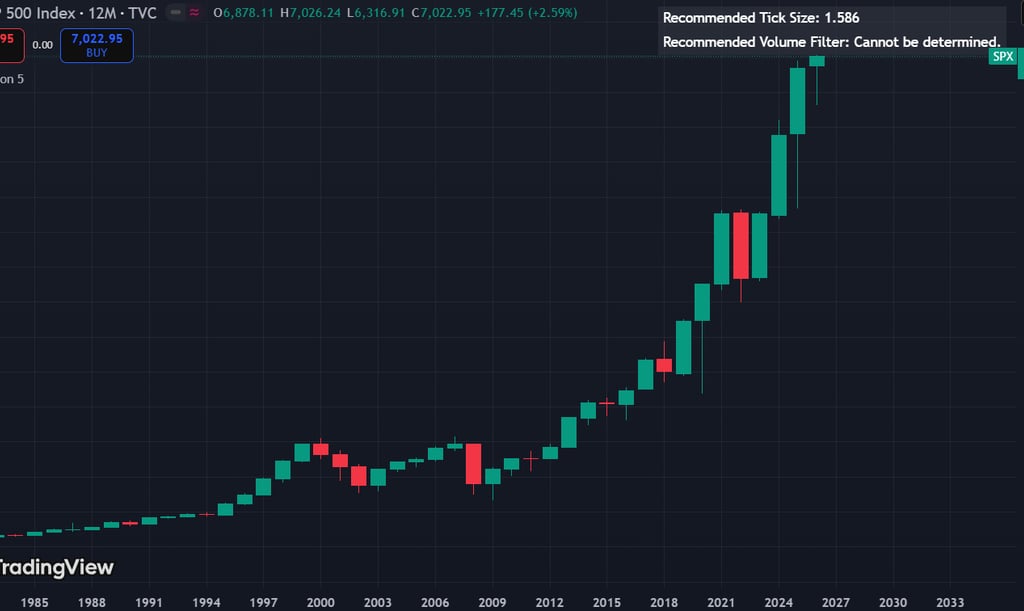
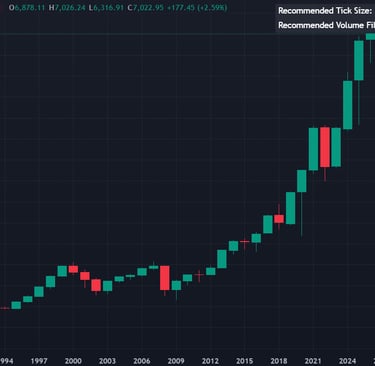
Source: Tradingview.com
→ All News
This Is My View of S&P 500 Market Performance YTD
This is my view of the S&P 500 Market Performance YTD. Current YTD momentum is still high, even though global conflict. So far best to invest in the short term as the market is still watching the current situation. There might slightly drop before gaining some momentum again.
Projection in 2027 is still gaining momentum but slightly drops before gaining again. Be sure when the momentum slightly drop, start invest on that position. To refine this perspective into a professional framework:
The current S&P 500 index return ytd suggests strong underlying momentum supported by liquidity and innovation-driven growth. However, markets rarely sustain upward movement without corrections. Short-term pullbacks are not signs of weakness but natural recalibration phases.
Looking ahead, the projection toward 2027 reflects a cyclical growth pattern. Structural drivers like AI, digital transformation, and global capital integration will likely continue supporting long-term expansion, though intermittent corrections should be expected.
Comparing with Global Markets
For readers of SEA Pulse Asia 247, it’s important to understand how the sp 500 ytd returns compare globally.
While Southeast Asian markets offer growth potential, they often lack the depth and liquidity of the U.S. market. This is why institutional investors frequently maintain significant exposure to the S&P 500.
However, diversification remains key. Relying solely on one index, regardless of its strength, introduces concentration risk.
Risks That Investors Should Not Ignore
Even with a strong s&p 500 index return ytd, risks remain present.
Geopolitical tensions can escalate quickly and disrupt market stability.
Interest rates may remain higher for longer than expected.
Corporate earnings growth could slow if economic conditions tighten.
There is also the risk of overvaluation. When optimism becomes excessive, corrections tend to follow.
As noted by Goldman Sachs analysts, elevated valuations often lead to periods of consolidation rather than continuous growth (Goldman Sachs, 2025).
Why This Metric Matters for Southeast Asia
The S&P 500 index return ytd has a ripple effect beyond the United States. Currencies, capital flows, and even commodity prices in ASEAN economies can be influenced by movements in the S&P 500. For example, stronger U.S. markets can attract capital away from emerging markets, impacting liquidity in the region.
For investors in Malaysia, Indonesia, or Vietnam, monitoring this index is not optional. It’s essential.
A Practical Perspective for Investors
Instead of chasing the highest sp 500 ytd returns, a more disciplined approach is often more effective.
Focus on long-term trends rather than short-term fluctuations.
Use corrections as opportunities rather than signals to panic.
Maintain diversification across regions and asset classes.
One experienced investor described it well:
“The best returns often come from staying invested when it feels uncomfortable.”
Conclusion
The S&P 500 index return ytd is more than a performance metric. It is a reflection of global confidence, innovation, and capital movement. While current momentum remains strong, history reminds us that markets move in cycles. The interplay between optimism and caution will continue to shape returns in the months and years ahead.
For readers of SEA Pulse Asia 247, the key takeaway is clear. Stay informed, stay disciplined, and understand that behind every percentage point lies a complex web of economic forces and human behavior. See other insights related to the S&P 500 here.
Disclaimer
This article is for informational purposes only and does not constitute financial advice. Any decisions should be made based on individual financial goals, risk tolerance, and consultation with a licensed financial advisor. Past performance, including historical S&P 500 returns and S&P 500 returns by year, does not guarantee future results. Markets are subject to volatility and unforeseen risks. Trade at your own risk!
References
Bloomberg. (2025). Corporate earnings outlook and equity performance.
Federal Reserve. (2024). Monetary policy and interest rate decisions.
Goldman Sachs. (2025). Equity market valuation report.
IMF. (2023). Global capital flows and emerging markets.
MSCI. (2023). Global equity market trends report.
S&P Dow Jones Indices. (2024). Historical performance of the S&P 500 index.
Contact:


© 2026 SEA Pulse Asia 247. All rights reserved.