
Oil & Gas Company in Malaysia: Can Petronas Stay Relevant in the Energy Transition?
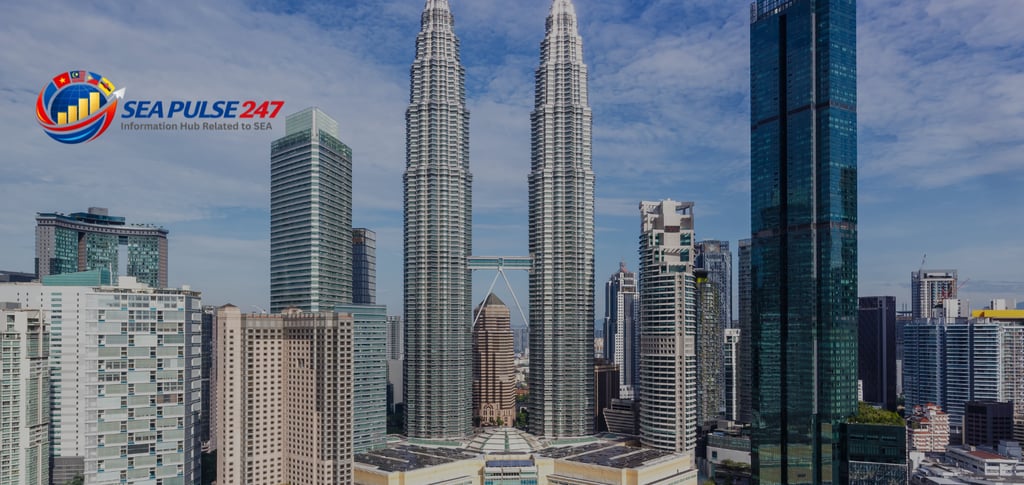
Petronas and Oil & gas company in malaysia remain central to the country’s economic backbone, but the global shift toward cleaner energy is forcing a critical question: can Petroliam Nasional Berhad, the leading company oil & gas in malaysia, stay relevant in a rapidly evolving energy landscape? As the energy transition accelerates worldwide, the future of oil and gas in Malaysia is no longer just about extraction but transformation.
Petronas and Oil & Gas Company in Malaysia: Navigating the Energy Transition Landscape
There’s a quiet shift happening in the energy world. Not dramatic enough to make headlines daily, but powerful enough to reshape entire industries. For decades, Petronas has stood as a symbol of national strength, driving Malaysia’s growth through its upstream and downstream operations, particularly via Petronas Cari Gali. Today, however, the ground beneath the oil and gas company in Malaysia is moving. The question isn’t whether change is coming. It’s whether Petronas can move fast enough.
A Legacy Built on Oil, A Future Beyond It
Petronas has long been a dominant force in oil and gas Malaysia, contributing significantly to government revenue and national development. According to Malaysia’s Ministry of Finance, petroleum-related income has historically contributed up to 20% of government revenue in certain years (Ministry of Finance Malaysia, 2023). That’s not just influence, that’s structural importance.
But here’s the tension: global energy demand is shifting. The International Energy Agency projects that fossil fuel demand could peak before 2030 under current policy trends (IEA, 2023). This puts every company oil and gas in Malaysia at a crossroads.
Petronas isn’t ignoring this reality. In fact, its strategy signals awareness. The company has begun investing in renewables, hydrogen, and carbon capture technologies. Still, transitioning from a hydrocarbon giant to a diversified energy player is not a simple pivot.
The Reality on the Ground
Talk to industry professionals, and you’ll hear a consistent theme: transformation is expensive and uncertain. One engineer working in offshore operations shared a simple observation:
“Five years ago, everything was about maximizing output. Now, half the conversations are about emissions.”
That shift reflects broader global pressure. Investors are increasingly prioritizing ESG metrics. Governments are tightening regulations. Consumers are becoming more conscious. These forces collectively reshape how an oil and gas company in Malaysia operates. Petronas has responded by committing to net-zero carbon emissions by 2050 (Petronas, 2022). It’s a bold statement. But commitments are only as strong as execution.
Energy Transition Is Not One-Size-Fits-All
One mistake often made in global discussions is assuming all countries transition at the same pace. Southeast Asia, including Malaysia, operates under a different set of realities. Energy demand is still growing. Industrialization continues. Affordable energy remains critical.
The Asian Development Bank highlights that Southeast Asia’s energy demand could increase by 60% by 2040 (ADB, 2022). That means oil and gas will not disappear overnight. For Petronas, this creates a dual responsibility. It must maintain reliable fossil fuel production while gradually investing in cleaner alternatives. It’s less of a switch and more of a balancing act.
Where Petronas Is Moving
The company’s recent strategy reveals three key directions. First, natural gas. Often seen as a transition fuel, gas emits less carbon than coal. Petronas is expanding its LNG footprint to meet regional demand.
Second, renewables. Through subsidiaries and partnerships, Petronas is entering solar and hydrogen markets. While still a small portion of its portfolio, the intention is clear. Third, carbon management. Technologies like carbon capture and storage are gaining traction. These allow continued fossil fuel use while reducing the emissions impact.
From an industry perspective, this is a pragmatic approach. It acknowledges current realities while preparing for future shifts.
Challenges That Cannot Be Ignored
Despite progress, the road ahead is far from smooth. Capital allocation remains a major challenge. Investing in renewables often delivers lower returns compared to traditional oil projects. For a company used to high-margin operations, this requires a mindset shift.
There’s also the issue of talent. Transitioning into new energy sectors demands different expertise. Engineers trained in drilling may not easily transition into hydrogen or solar technologies. Then comes competition. Global energy giants like Shell plc and BP plc are aggressively investing in renewables. Petronas must compete not just locally, but globally.
Projection Toward 2027: What the Data Suggests
Looking ahead to 2027, several trends are supported by current data. Global oil demand is expected to stabilize rather than sharply decline, with Asia remaining a key growth driver (IEA, 2023). This suggests that oil and gas in Malaysia will still play a crucial role in the near term.
At the same time, renewable energy capacity in Southeast Asia is projected to grow significantly, driven by government policies and private investment (ADB, 2022). This creates both competition and opportunity for Petronas.
Internally, Petronas is expected to increase its share of non-traditional energy investments. While exact figures vary, analysts estimate that energy companies could allocate up to 20–30% of capital expenditure to low-carbon projects by the late 2020s (Deloitte, 2023). By 2027, Petronas will likely look different. Not fully transformed, but clearly diversified. Still rooted in hydrocarbons, yet increasingly shaped by sustainability.
A Human Perspective: Why This Matters
Behind all the strategy and data, there’s a human layer often overlooked. Thousands of Malaysians depend on the oil and gas company in Malaysia for their livelihoods. Engineers, technicians, supply chain workers, and even small businesses are tied to the ecosystem. Energy transition isn’t just a corporate strategy. It’s a social shift.
A contractor in Sarawak once described it simply:
“If projects slow down, everything slows down.”
That’s why Petronas’ evolution must be carefully managed. Too slow, and it risks irrelevance. Too fast, and it risks economic disruption.
Final Insight
Petronas stands at a defining moment. It is no longer just an oil producer. It is becoming an energy company in the truest sense. The path forward isn’t about abandoning oil overnight. It’s about redefining identity.
For SEA Pulse Asia 247, this story reflects a broader truth across Southeast Asia. The energy transition is not a straight line. It’s layered, complex, and deeply tied to economic realities. Petronas has the scale, resources, and strategic awareness to remain relevant. But relevance in this new era will not come from dominance alone. It will come from adaptability.
And in the energy world today, adaptability is everything.
References
Asian Development Bank. (2022). Southeast Asia Energy Outlook.
Deloitte. (2023). Energy Transition Investment Trends Report.
International Energy Agency. (2023). World Energy Outlook 2023.
Ministry of Finance Malaysia. (2023). Economic Report 2023/2024.
Petronas. (2022). Sustainability Report 2022.
Contact:


© 2026 SEA Pulse Asia 247. All rights reserved.