
Interview Questions and Answers for Interview: Employer Demand
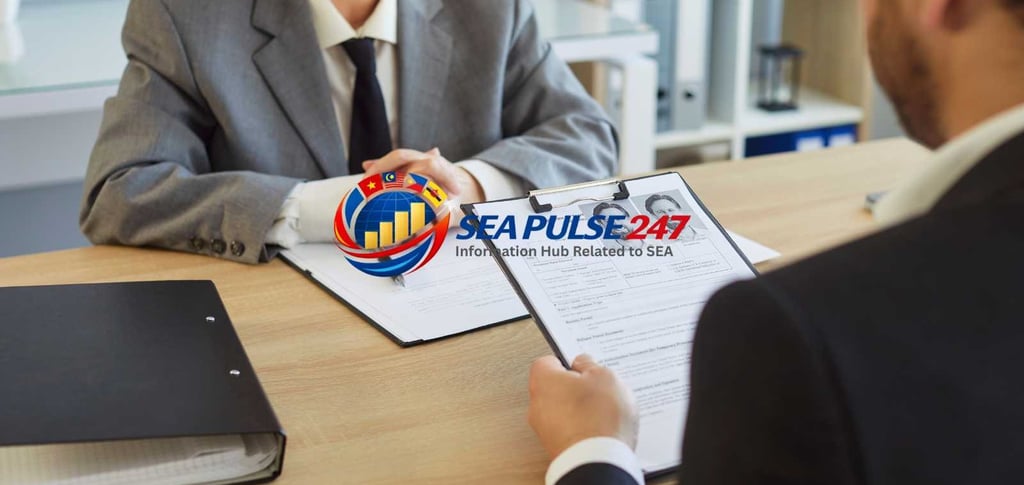

Interview questions and answers for interview is one of the most searched topics by job seekers because interviews remain the most critical step in securing a role. Whether you are preparing for a job interview or refining your interview tips, understanding how to respond strategically can make the difference between rejection and an offer. This guide from SEA Pulse Asia 247 breaks down real insights, common questions and answers for an interview, and practical interview advice to help you stand out with confidence.
Interview Questions and Answers for Interview: A Strategic Guide for Serious Candidates
Walking into an interview is not just about answering questions. It is about telling a convincing story about your value. Many candidates think they need perfect answers, but hiring managers are actually looking for clarity, authenticity, and relevance.
A recruiter once shared that most candidates fail within the first five minutes, not because they lack skills, but because they cannot clearly explain who they are and what they bring (Harvard Business Review, 2022). That insight alone reshapes how you should prepare for interview sessions. Let’s break this down in a way that feels real, practical, and grounded in how interviews actually work today.
Understanding the Psychology Behind Interviews
Before diving into interview questions and answers for interview, it helps to understand what employers are really evaluating. They are not just assessing your experience. They are asking themselves:
Can this person solve our problems?
Will this person fit into our team?
Can we trust this person to deliver?
According to LinkedIn’s hiring research, 92% of talent professionals say soft skills matter as much or more than technical skills (LinkedIn, 2023). That means your communication, confidence, and clarity matter just as much as your resume.
The Most Common Interview Question: “Tell Me About Yourself”
This is where most candidates either win or lose momentum.
A weak answer sounds like a timeline.
A strong answer sounds like a story with direction.
Instead of listing your past roles, frame your answer like this:
Start with your current role and expertise.
Highlight one or two key achievements.
Connect your experience to the role you are applying for.
For example, instead of saying:
“I worked in marketing for three years…”
You might say:
“I’m currently a digital marketing executive specializing in performance campaigns, where I’ve helped increase conversion rates by 30% over the past year. Before that, I had experience in business development, which gave me a strong understanding of client behavior. Now, I’m looking to bring both analytical and strategic skills into a more growth-focused role.”
This approach shows clarity and purpose, which is exactly what employers want.
Why Do You Want This Job?
This question tests sincerity. Many candidates give generic answers, but hiring managers can easily detect that. What they want is alignment.
A hiring manager once mentioned that the best answers reference something specific about the company, not just the role (Glassdoor, 2024). A strong response might connect your goals with the company’s direction. For example, if the company is expanding digitally, mention how your skills can support that growth.
This is where your interview advice becomes practical. Research is not optional. It is expected.
Strengths and Weaknesses: A Test of Self Awareness
This question is less about perfection and more about honesty. When discussing strengths, focus on impact. When discussing weaknesses, focus on growth.
A candidate once admitted struggling with delegation but explained how they started using task management tools to improve team efficiency. That answer stood out because it showed awareness and action. Employers are not looking for flawless candidates. They are looking for candidates who can evolve. Check out how to answer "Tell Me About Yourself" clean and professionally here.
Handling Behavioral Questions with Confidence
Behavioral questions often start with:
“Tell me about a time when…”
This is where structure matters. The STAR method is widely recommended because it keeps your answer focused:
Situation
Task
Action
Result
Research shows structured responses are easier for interviewers to evaluate and remember (Harvard Business Review, 2022). For example, when asked about handling pressure, instead of speaking generally, describe a real situation where you managed deadlines, what you did, and what the outcome was.
This is one of the most effective common answers for interview questions strategies that separates average candidates from strong ones.
Salary Expectations: A Strategic Moment
This question often creates anxiety, especially for candidates transitioning roles or industries. The key is to be informed and flexible. According to industry hiring trends, candidates who provide a reasonable range instead of a fixed number are more likely to progress in negotiations (LinkedIn, 2023).
You might say:
“Based on my experience and market research, I’m expecting a range between RM3,000 and RM4,000, but I’m open to discussing it based on the overall package and growth opportunities.”
This shows confidence without closing the door.
Micro Insight: What Actually Impresses Interviewers
Sometimes it is the small things. A candidate once brought a simple one-page summary of their achievements. Another referenced a recent company project during the interview. These actions showed effort and preparation.
In reality, preparing for a job interview is not just about rehearsing answers. It is about demonstrating genuine interest.
Common Mistakes Candidates Still Make
Even strong candidates can fail due to avoidable mistakes. Over-rehearsing answers can make you sound robotic. Giving long, unfocused responses can lose the interviewer’s attention. Failing to ask questions can signal a lack of interest.
One recruiter noted that candidates who ask thoughtful questions are perceived as more engaged and strategic (Glassdoor, 2024).
So when the interviewer asks, “Do you have any questions?”, never say no.
Building Your Own Answer Strategy
Instead of memorizing scripts, build frameworks.
Understand your story.
Know your key achievements.
Align your experience with the job.
This is what turns common questions and answers for an interview into personalized, high-impact responses.
Final Thoughts: Turning Preparation into Confidence
At the end of the day, interviews are conversations with purpose. The more you prepare for interview, the more natural your answers will feel. Confidence does not come from memorization. It comes from clarity.
This is what SEA Pulse Asia 247 emphasizes in every career insight. Real preparation leads to real opportunities. So the next time you walk into an interview, remember this:
You are not just answering questions.
You are presenting your value.
References
Glassdoor. (2024). Top interview questions and how to answer them. Retrieved from https://www.glassdoor.com
Harvard Business Review. (2022). How to answer the toughest interview questions. Retrieved from https://hbr.org
LinkedIn. (2023). Global talent trends report. Retrieved from https://www.linkedin.com
→ All News
Contact:


© 2026 SEA Pulse Asia 247. All rights reserved.